Monday, May 19, 2025

Comfortable Everywhere, Accountable Nowhere: The Great NRI Olympics


Comfortable Everywhere, Accountable Nowhere: The Great NRI Olympics


Meet Raj.
 Born in Delhi, raised in Dubai, studied in London, now working in Toronto, but dreams of retiring in Goa (as long as there’s AC and high-speed WiFi).

Raj is what we call the “Global Indian” — someone who is comfortable everywhere, but accountable nowhere. Let’s explore how Raj and his tribe win gold in the Great NRI Olympics of Double Standards.


Language Gymnastics

In India:
 Raj orders coffee at Starbucks with a fake American accent and says, “Bhaiya, make it extra hot, okay?”

Abroad:
 He hears someone speaking Hindi and runs like he found long-lost family. “Bhai saab! Desi ho? Which city, bro??”

🥇 Gold medal in: Selective Hindi Patriotism


Food Wrestling

In India:
 Raj eats quinoa bowls, avocado toast, and judges anyone who eats “oily Indian food.”

Abroad:
 Raj will drive 45 minutes and cross two toll booths to eat authentic chole bhature from a guy named Harjeet in a basement.

🥈 Silver medal in: Butter Chicken Loyalty Abroad Only


Social Justice Yoga

In India:
 Raj avoids speaking to his maid, asks her to use a separate glass, and posts on Instagram about his “minimalist home.”

Abroad:
 Raj gives TED Talks about “India’s strength lies in its diversity and inclusion.”

🥇 Gold medal in: Selective Human Rights Awareness


Minority Acrobatics

In India:
 Raj supports loud majoritarian politics and believes every problem is because of “those people.”

Abroad:
 Raj joins a rally about minority rights and posts black squares on Instagram. “We NRIs understand struggle,” he says.

🥉 Bronze medal in: Situational Empathy


Foreign Policy Kabaddi

In India:
 Raj has strong opinions supporting Israel and shares memes from WhatsApp University.

Abroad:
 He’s chanting “Free Palestine!” with a keffiyeh and sipping organic tea.

🥇 Gold medal in: Geopolitical Confusion


Final Event: The Disappearing Act

Whenever it’s time to donate to Indian causes, pay taxes or take a stand on serious issues…
 Raj becomes a ghost. 👻

“Sorry yaar, I’m just a global citizen. I don’t get involved in local stuff.”

🥇 Gold medal in: Accountability Vanishing Magic Trick


Conclusion:

NRIs like Raj are world champions at being comfortable everywhere, enjoying the best of all worlds — but when it comes to accountability? Suddenly no WiFi, no passport, no comment.

It’s not hypocrisy. It’s talent.
 Maybe it’s time we added this to the Olympics. 😉

Underemployment in India: A Silent Crisis in the Shadow of Unemployment

 India’s economic narrative often revolves around unemployment—the stark reality of millions unable to find jobs. With a labor force of over 500 million and a youth unemployment rate hovering around 23% (as per recent CMIE data), it’s no surprise that joblessness dominates headlines. But lurking beneath this crisis is another, less discussed issue: underemployment. While unemployment leaves people jobless, underemployment traps skilled workers in roles that underutilize their education, skills, and potential. It’s a systemic failure that raises tough questions about India’s education system, industry demands, and societal priorities.

The Scale of Underemployment
Underemployment is harder to quantify than unemployment, but its impact is no less profound. It manifests in two primary forms: visible underemployment (working fewer hours than desired) and invisible underemployment (working in jobs that don’t match one’s qualifications or skills). In India, the latter is particularly pervasive. According to the International Labour Organization (ILO), over 30% of India’s employed youth are overqualified for their jobs—a figure that reflects the mismatch between education and employment.
Consider the examples: graduates from prestigious institutions like BITS Pilani working as quality assurance (QA) testers, IIT engineers building dashboards in Power BI, or investment bankers churning out PowerPoint presentations. These are not isolated anecdotes but symptoms of a broader trend. A 2023 study by the Azim Premji University found that nearly 40% of engineering graduates in India work in jobs that don’t require their specialized training. Civil engineers pivot to software development, not out of passion but because the job market for their field is saturated or underpaid. This isn’t just a personal tragedy—it’s an economic inefficiency that stifles innovation and growth.
Why Are Graduates Underemployed?
The roots of underemployment lie in a confluence of structural and systemic issues:
  1. Misaligned Education System: India’s higher education system, particularly in engineering and technical fields, is often criticized for being outdated and theoretical. Curricula at even top-tier institutes like IITs and NITs emphasize rote learning over practical, industry-relevant skills. For instance, a civil engineering graduate may excel in structural analysis but lack exposure to modern software tools or project management—skills that employers prioritize. Meanwhile, the tech industry, which absorbs over 50% of engineering graduates, demands coding proficiency, often irrelevant to non-computer science disciplines.
  2. Skewed Admission Processes: India’s hyper-competitive entrance exams (JEE, NEET, etc.) prioritize rote memorization and rank-based admissions. Students who don’t score high enough for coveted branches like computer science often settle for fields like civil or mechanical engineering, only to find limited opportunities post-graduation. This forces them into unrelated roles, like software development, where they must upskill from scratch.
  3. Industry Expectations vs. Reality: Corporate India often prioritizes cost over talent utilization. Roles like QA testing or dashboard creation are low-cost, repetitive tasks that companies assign to highly qualified graduates to cut expenses. Investment bankers spending hours on PowerPoint decks aren’t honing their financial acumen—they’re filling a gap in operational efficiency. This reflects a broader corporate mindset that values immediate output over long-term innovation.
  4. Economic Pressures and Job Scarcity: With India’s GDP growth slowing to around 6% in 2024 (per IMF estimates), job creation hasn’t kept pace with the 12 million young people entering the workforce annually. Graduates from elite colleges, facing intense competition, often accept “safe” jobs that don’t match their skills rather than risk unemployment. For instance, software roles, even low-skill ones, offer better pay and stability than core engineering jobs, pushing civil or mechanical engineers to pivot.
The Human and Economic Cost
Underemployment isn’t just a statistic—it’s a personal and societal loss. Graduates who spend four years and lakhs of rupees on a degree only to work in unrelated, low-skill jobs face disillusionment and mental health challenges. A 2022 survey by Deloitte found that 60% of Indian Gen Z workers felt their jobs didn’t align with their career goals, contributing to burnout and disengagement.
Economically, underemployment squanders human capital. When an IIT graduate spends their day building basic dashboards, their potential to innovate or solve complex problems is wasted. This inefficiency hampers India’s ambition to become a $5 trillion economy. Moreover, it perpetuates a cycle where students chase “safe” degrees (like computer science) over passion-driven fields, further skewing the talent pool.
Is the Education System to Blame?
The question of whether college education is being “used” in jobs is central to this crisis. If an IIT graduate’s role could be performed by someone with a short-term coding bootcamp, what was the point of their rigorous education? This disconnect prompts a deeper question: should India’s education system pivot to better match industry expectations?
The answer isn’t straightforward. On one hand, aligning curricula with industry needs—emphasizing skills like coding, data analysis, or project management—could reduce underemployment. Some institutes, like IIITs, have already integrated industry-oriented courses, with partnerships from tech giants like Infosys or TCS. On the other hand, a purely utilitarian approach risks stifling creativity and critical thinking, which elite institutions are meant to foster. A civil engineer shouldn’t have to become a software developer, but the system must ensure their skills are valued in their own field.
Reforming the curriculum is only half the battle. Entrance exams need an overhaul to prioritize aptitude over rote learning. Industry must also step up, creating roles that leverage specialized skills rather than funneling graduates into generic tech jobs. Government policies, like incentives for core engineering sectors (e.g., infrastructure or manufacturing), could balance job distribution across fields.
A Broken System, But Not Hopeless
India’s underemployment crisis is a symptom of a misaligned ecosystem—education, industry, and policy working at cross-purposes. It’s tempting to call the system “fucked,” as frustration mounts among graduates who feel cheated by their degrees. But the issue, while systemic, isn’t intractable.
Solutions lie in multi-pronged reforms:
  • Education: Update curricula to blend theoretical rigor with practical skills. Introduce flexible tracks allowing students to explore interdisciplinary fields.
  • Industry: Encourage companies to create roles that utilize specialized skills, supported by tax incentives or public-private partnerships.
  • Policy: Invest in sectors like infrastructure, renewable energy, and manufacturing to absorb core engineering talent.
  • Career Guidance: Provide better counseling to align students’ interests with market realities, reducing the pressure to chase “safe” degrees.
Underemployment may not grab headlines like unemployment, but its toll on India’s youth and economy is undeniable. It’s time to stop treating graduates as cogs in a machine and start valuing their potential. Only then can India turn its demographic dividend into a true asset, rather than a source of frustration.

The Man in the Arena: Nehru’s Legacy and the Courage to Endure Criticism


The Man in the Arena: Nehru’s Legacy and the Courage to Endure Criticism

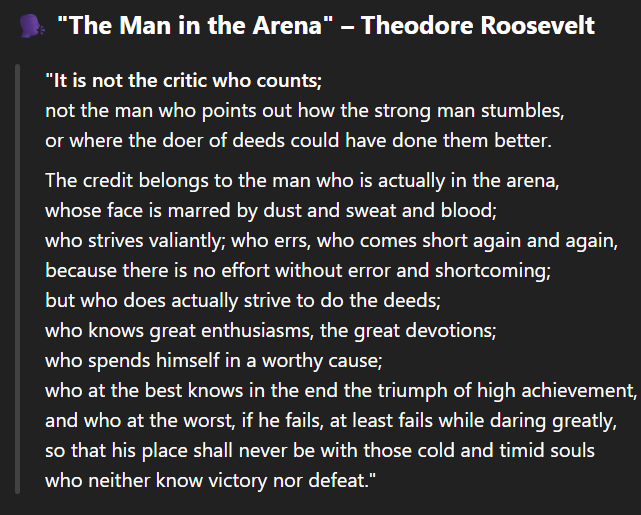
Theodore Roosevelt’s timeless “Man in the Arena” speech, delivered in 1910, speaks of the courage it takes to strive, dare greatly, and persevere despite setbacks and criticism. The essence of this metaphor — the image of a person who fights on, undeterred by the jeers of the crowd — resonates deeply when I reflect on the legacy of India’s first Prime Minister, Jawaharlal Nehru. Every time I hear someone abuse or vilify Nehru, I am reminded of the man in the arena, not because of the criticism itself, but because of what Nehru’s life and leadership represent: a relentless commitment to a fledgling nation, marred by imperfections yet marked by audacious vision.

Nehru’s Arena: Building a Nation from Ashes

When Nehru took the helm of independent India in 1947, the nation was a fragile mosaic — scarred by partition, burdened by poverty, and fragmented by linguistic and cultural diversity. As the first Prime Minister, Nehru stepped into an arena where the stakes were nothing less than the survival of a newly sovereign state. His vision was ambitious: to transform India into a modern, secular, and industrialized democracy. He laid the foundations for institutions like the Indian Institutes of Technology (IITs), championed scientific temper through the Council of Scientific and Industrial Research (CSIR), and spearheaded the Non-Aligned Movement, giving India a distinct voice in a polarized Cold War world.

Yet, Nehru’s tenure was not without flaws. His handling of the Kashmir issue, the 1962 Sino-Indian War, and his economic policies, often criticized for their socialist tilt, have been points of contention. These missteps are dissected endlessly, often with the benefit of hindsight, by critics who reduce his legacy to a litany of failures. It’s in these moments of harsh judgment that Roosevelt’s words echo: “It is not the critic who counts… but the man who strives or dares greatly.”

The Courage to Dare Greatly

Nehru dared greatly. He dared to dream of a united India when communal tensions threatened to tear it apart. He dared to invest in science and education when millions were illiterate and starving. He dared to chart a foreign policy that defied superpower dominance, even when India’s military and economic might was nascent. His achievements — like the Bhakra-Nangal Dam, often called the “temple of modern India,” or the establishment of a robust parliamentary democracy — were not the work of a timid leader. They were the fruits of a man who, in Roosevelt’s words, “spent himself in a worthy cause.”

Critics today, whether on social media or in political discourse, often paint Nehru as a symbol of elitism, inefficiency, or even betrayal. They point to his privileged background, his Anglophile tendencies, or his idealized vision of socialism as evidence of disconnect from the “real India.” Some accusations border on caricature, stripping away the context of a man navigating a nation in its infancy. This is not to say Nehru was beyond reproach — far from it. Leadership demands accountability, and Nehru’s decisions, like those of any mortal, were imperfect. But to reduce his legacy to memes, half-truths, or vitriol is to miss the forest for the trees.

The Critic vs. the Striver

Roosevelt’s speech reminds us that the critic’s role is easy. It takes little courage to point out flaws from the sidelines, to mock or malign without understanding the weight of responsibility. Nehru’s detractors often ignore the chaos of the era he governed: a nation reeling from colonial exploitation, a partition that killed millions, and a world on the brink of ideological warfare. To lead in such times was to invite scrutiny, and Nehru bore it. He faced opposition not just from political rivals but from within his own party, yet he pressed on, driven by a belief in India’s potential.

The abuse hurled at Nehru today — whether in heated X posts or revisionist narratives — often feels like a betrayal of the arena he fought in. It’s not the criticism itself that stings; it’s the erasure of his striving. To vilify Nehru without acknowledging his contributions is to forget the dams that irrigated fields, the institutions that nurtured minds, and the democratic framework that, despite its creaks, endures. It’s to forget the man who, in his famous “Tryst with Destiny” speech, spoke not of personal glory but of collective redemption.

Why the Man in the Arena Matters

Every time Nehru is abused, I’m reminded that legacy is a battlefield. The man in the arena doesn’t win every fight, but he fights nonetheless. Nehru’s life was a testament to this. He was not a saint, nor was he infallible. He was a man who dared to dream of a better India, who stumbled but never stopped walking. Roosevelt’s words are a call to honor such strivers, not to lionize them uncritically but to recognize their courage in the face of overwhelming odds.

As India marches into its future, the debates over Nehru will continue. Some will see him as a visionary; others, as a flawed idealist. Both can be true, but neither should erase the other. To those who reduce him to a punching bag, I urge a moment of reflection: step into the arena of 1947, shoulder the weight of a newborn nation, and ask yourself what you would have done differently. The answer might not be as simple as it seems.

In the end, Nehru’s story is not just about one man — it’s about the resilience of a nation. He was the man in the arena, bloodied but unbowed, and India today stands taller because of it. Let’s critique, but let’s also remember: the credit belongs to the one who strives.

The Easy Job: Being a Critic

It’s easy to sit in 2025, with Wi-Fi and hindsight, and mock the decisions of someone who led a nation in 1947. It’s easy to say he should have done this or that, knowing what we know now.

But Nehru didn’t have that luxury. He had to act in real time, in real crises, with no pause button. He faced wars, food shortages, communal violence, and international pressures. Still, he persisted.


Was He Perfect? No. Was He Brave? Undeniably.

To be clear, Nehru made mistakes — from underestimating China’s threat to misreading internal dynamics at times. But the answer to historical mistakes is honest study, not blind hatred. To critique is fair. But to abuse, distort, or erase is to act like the cold, timid soul Roosevelt warned us about — one that “neither knows victory nor defeat.”

Conclusion

Our democracy, imperfect as it is, still stands. And it stands in no small part due to the man so many love to hate. The man who could have become a despot but chose dissent. The man who could have clung to power indefinitely, but institutionalized elections, courts, and free press.

In an age where post-truth dominates and historical memory fades, I remind myself:
 The critic does not count.
 The credit belongs to the man in the arena.

And Nehru, for better or worse, was one of the bravest India ever had.

Sunday, May 18, 2025

Could AI Replace India’s Politicians? Envisioning a 2035 Trial Run


Could AI Replace India’s Politicians? Envisioning a 2035 Trial Run

Imagine a Lok Sabha session in 2035: an AI agent representing Varanasi proposes a Rs. 200-crore Ganga cleanup project, backed by real-time water quality data and citizen petitions. Another AI, representing Chennai, counters with a coastal resilience plan, citing Tamil Nadu’s cyclone risks. The debate is civil, data-driven, and live-streamed, with citizens weighing in via a mobile app. This isn’t science fiction — it’s a plausible future where AI agents replace human MPs and MLAs in Indian politics. With AI advancing rapidly, could India pioneer a bold experiment by 2035, replacing 10–15% of its elected representatives with AI? Here’s what such a system might look like, its promise, and its perils.

The Case for AI Politicians

India’s political system, vibrant yet flawed, grapples with corruption, dyn The Times of India reported in 2024 that 30% of sitting MPs face criminal charges, from bribery to murder. Voter disillusionment is palpable — turnout hovers at 67%, and trust in politicians is eroded by dynastic politics and populist rhetoric. Meanwhile, AI models like Grok (xAI), ChatGPT (OpenAI), DeepSeek, and Gemini (Google) are evolving fast. By 2035, these systems could process vast datasets — economic trends, health metrics, public grievances — to propose policies with unprecedented precision.

An AI-driven political system could offer:

  • Transparency: AI decisions would be auditable, with clear logs of data inputs and reasoning, curbing backroom deals.
  • Accessibility: Unlike MPs who surface only during elections, AI agents could engage citizens 24/7 via apps, addressing concerns instantly.
  • Evidence-Based Policies: AI could analyze constituency-specific data to propose tailored solutions, like MPLAD-funded schools in educationally backward areas or water projects in drought-prone regions.
  • Efficiency: AI could streamline parliamentary debates and voting, reducing gridlock in India’s fractious legislatures.

Diverse AI models could mirror India’s ideological spectrum. A Grok-based agent might prioritize free speech and economic liberty, while a Gemini-based one could emphasize social equity and sustainability. Voters would choose AI agents like they choose parties, aligning with their values.

A 2035 Trial Run: How It Could Work

A pilot replacing 10–15% of India’s 543 Lok Sabha MPs and thousands of state MLAs is ambitious but feasible. Here’s a blueprint:

  • Pilot Constituencies: Select 50–80 Lok Sabha seats and state assembly segments, spanning urban hubs like Bengaluru, rural heartlands like Uttar Pradesh, and tribal areas like Assam. This ensures diverse testing grounds.
  • AI Agent Design: Develop agents trained on constituency data — census reports, economic indicators, social media sentiment. Each agent would be multilingual, supporting Hindi, Tamil, Bengali, and more, to reflect India’s linguistic diversity. Voters could pick from a curated list of AI models, each with transparent “manifestos” (e.g., Grok: “Maximize free expression”; DeepSeek: “Optimize economic growth”).
  • Elections: Citizens vote for AI agents via electronic ballots, choosing models that align with their priorities. The Election Commission would oversee the process, ensuring fairness.
  • Parliamentary Role: AI agents would debate and vote via a secure platform, proposing MPLAD projects (Rs. 5 crore annually per MP) based on data-driven needs. Human moderators would ensure compliance with parliamentary rules.
  • Citizen Engagement: AI agents would interact via apps, chatbots, or kiosks, answering queries and allocating resources in real time. A farmer in Bihar could request irrigation support, and the AI would evaluate feasibility instantly.
  • Oversight: An independent body under the Election Commission would monitor AI performance, address biases, and bolster cybersecurity.

The Promise of AI Governance

The potential is transformative. India’s economy, projected to hit $4 trillion by 2035, could benefit from optimized budgets and reduced wasteful spending. AI could tackle persistent challenges — 6–7% unemployment, uneven healthcare, climate risks — with precision. For instance, an AI representing Rajasthan could prioritize solar energy projects, leveraging the state’s abundant sunlight.

Socially, AI could dilute caste- and religion-based politics by focusing on data, not vote banks. A 2023 Pew survey found 64% of Indians want less divisive politics — AI could deliver. In Parliament, debates would shift from theatrics to substance, with AI agents simulating thousands of policy scenarios to predict outcomes.

Globally, India could set a precedent. If successful, this experiment might inspire democracies like Brazil or the US, positioning India as a leader in AI-driven governance.

The Perils and Pitfalls

Yet, the path is fraught with challenges:

  • Bias in AI: AI isn’t neutral. Training data or developer priorities could embed biases. An urban-biased AI might neglect rural needs, and a Hindi-centric model could alienate non-Hindi speakers. Ensuring inclusivity across India’s 1.4 billion people is daunting.
  • Cybersecurity: AI systems are vulnerable to hacking or manipulation. A 2024 Economic Times report highlighted India’s rising cyber threats — AI politicians would need ironclad defenses.
  • Public Trust: Indian politics thrives on charisma and emotional appeals. Can AI inspire voters in Uttar Pradesh or Tamil Nadu like a Modi or Mamata? A 2022 India Today poll showed 70% of voters prioritize “relatable” leaders — AI’s cold logic might fall short.
  • Digital Divide: With internet penetration at 50–60% in 2025, rural and marginalized communities might struggle to engage with AI agents. Bridging this gap by 2035 is critical.
  • Accountability: Who’s liable if an AI makes a flawed decision — its developers, the government, or voters? Unlike humans, AI can’t face jail or public ire.
  • Political Resistance: Dynasties and entrenched politicians, from the Gandhis to regional satraps, might see AI as a threat. Pushback could be fierce.

Navigating the Human Element

Critics argue humans are irreplaceable. Politics isn’t just data — it’s negotiation, coalition-building, and inspiration. India’s chaotic socio-political fabric demands leaders who can navigate caste dynamics, regional rivalries, and coalition dramas. An AI might excel at policy but falter in the “art” of politics. Moreover, voters’ loyalty to figures like Modi (with approval ratings near 70% in 2024 Times Now polls) or regional icons could slow AI adoption.

To succeed, the trial must blend AI’s efficiency with human empathy. Voter education campaigns, in local languages, could demystify AI, emphasizing its role as a servant, not a master. Pilot constituencies could retain human advisors to bridge emotional gaps, ensuring AI doesn’t feel alienating.

A Glimpse of 2035

Picture a state assembly in Patna. An AI agent, representing Nalanda, proposes a Rs. 50-crore skill-training hub, citing youth unemployment data. A human MLA from Patna counters with a healthcare plan, appealing to local sentiments. The AI refines its proposal in real time, incorporating feedback. Citizens watch the debate on their phones, rating policies via an app. The session ends with a vote — AI and human legislators in sync, balancing data and heart.

This hybrid model could redefine Indian democracy, making it more responsive and inclusive. But it hinges on execution: robust technology, airtight security, and public buy-in. The digital divide must shrink, and AI must be designed with India’s diversity at its core.

The Road Ahead

A 10–15% AI replacement trial by 2035 is a radical yet achievable goal. It could curb corruption, optimize resources, and empower citizens, but only if India navigates the risks — bias, security, and trust. Starting small, with inclusive design and human oversight, could pave the way for a future where AI and humans coexist in governance. If India pulls it off, it might not just transform politics at home but inspire the world.

The question isn’t whether AI can govern — it’s whether India’s voters, leaders, and institutions are ready to let it try. What do you think? Could AI be your MP by 2035?

Disclaimer: This article is a speculative exploration based on current AI trends and India’s political landscape.


When Privilege Gets Help, It’s “Networking”; When Others Get Help, It’s “Quota”

  When Privilege Gets Help, It’s “Networking”; When Others Get Help, It’s “Quota” Unpacking the Double Standards of Caste Privilege in India...